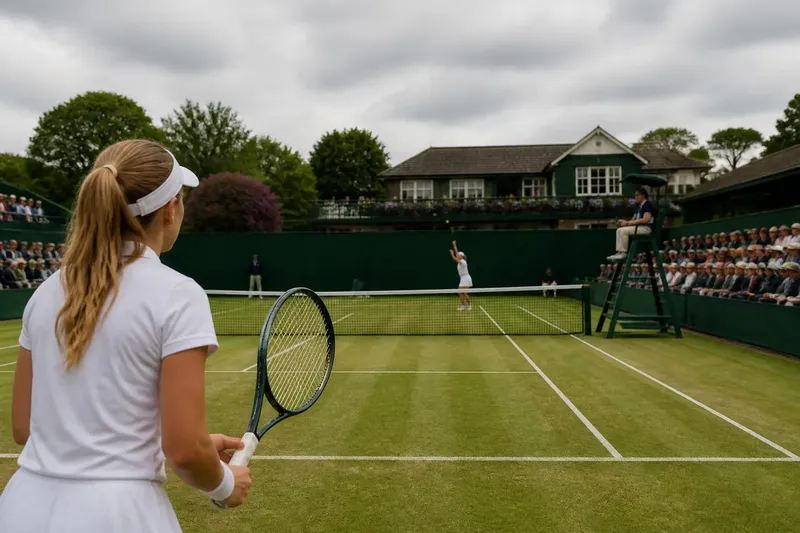
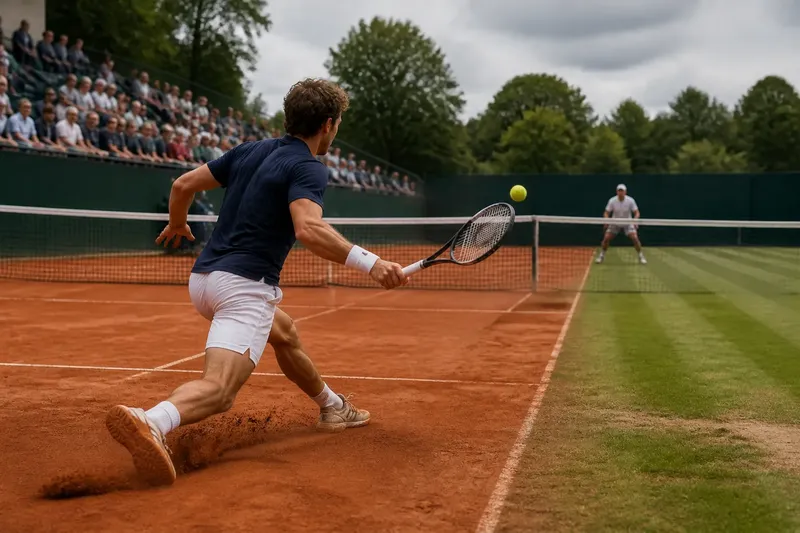
The Baseline Rally: Reading Depth and Position
Learn to read depth in a tennis baseline rally by tracking contact, recovery, and court space so you can see who controls the next exchange.

The most common mistake when reading a tennis baseline rally is to judge each shot by its landing spot alone. That misses how depth changes a player’s contact and recovery, and makes it harder to see why the next shot succeeds or fails. Follow the hitter’s preparation and movement after contact, not just the ball’s bounce.
Read the contact
A deep ball can force an opponent to hit while retreating or to make contact from an uncomfortable position. Watch their feet and racket preparation as the ball arrives. A hurried swing, a contact made while backing up, or a high defensive reply can suggest the shot has disrupted their setup.
Depth is only one clue. A player may stand well behind the baseline by choice, and a ball landing deep may still be easy to handle if it arrives slowly and allows time to prepare. Judge the incoming shot by what the opponent can do with it, not by its landing point alone.
Look at the hitter’s recovery as well. After striking, do they regain balance and move toward a useful position, or are they still drifting toward the sideline? A difficult contact can matter less if the player recovers in time to cover the likely response.
Watch the recovery
For spectators, recovery reveals the tactical cost of a shot. A ball aimed toward a corner may pull an opponent wide, but it can also leave the hitter with ground to cover. The next exchange shows whether the hitter created a useful opening or merely sent the ball away from the middle.
Track both players between contacts. Notice who turns and moves first, who has to stop and reset, and who reaches the next ball in balance. These details explain how a rally shifts without relying on labels such as “aggressive” or “defensive.”
- If the opponent makes contact while moving backward, then watch for a shorter or higher reply; if they remain balanced, expect that they may redirect with control.
- If the hitter recovers toward the middle after playing wide, then watch how they cover the next shot; if they remain near the sideline, look for space on the opposite side.
- If a player reaches the next ball while balanced, then assess their shot options; if they stretch or arrive late, expect fewer comfortable choices.
- If both players return to stable positions, then judge the next shot on its own; if one is still recovering, watch whether the opponent can use that delay.
- If a ball draws an opponent forward, then watch whether the hitter has time to follow; if the hitter stays back, note whether the opponent can take control of the next contact.
- If the ball travels wide and the hitter has begun recovering, then watch the open court; if recovery has not started, check whether the reply can target the space they left.
Compare shot choices
Deep through the middle can limit the angles available to the opponent while making them work from farther back. It may also leave them balanced and able to choose a direction. Watch whether the shot produces a rushed contact, rather than assuming a central ball has controlled the rally.
A deep ball toward a corner can make an opponent cover both distance and lateral movement. The tradeoff is that the hitter must recover from a wider position. If the opponent sends the ball back toward the open side, the hitter’s movement after contact becomes as important as the original placement.
A shorter ball changes the opponent’s contact location. It may draw them forward, but it can also provide an easy attack if it sits up. Watch the player who hit it: are they balanced and ready for the next exchange, or still watching their shot instead of recovering?
What does movement tell you?
Why does a player hit from behind the baseline?
They may have been pushed back by the incoming shot, or they may prefer to create more time and space. Check whether they are moving backward at contact and whether their reply is controlled before deciding what the position means.
How can you tell if a wide shot worked?
Watch whether the opponent reaches the ball in balance and where the hitter recovers. A wide shot can create pressure, but the next position shows whether the hitter can cover the reply or has left an opening.
What should you watch after a short ball?
Look at the opponent’s approach and the original hitter’s readiness. If the opponent arrives early and balanced, they may attack; if they stretch or have to hit upward, the short ball may have made the contact harder.
Does a deep ball always create pressure?
No. A player may have time to set up, or may already be positioned well behind the baseline. Watch the contact, the quality of the reply, and the recovery before judging the shot’s effect.
Follow one exchange
Say you are watching an invented rally: one player hits a ball toward the middle, and the opponent replies short. The first player steps forward but sees the opponent balanced and waiting near the center. They take the next ball with control rather than rushing toward the net; the observable result is that the exchange remains open, because the forward step did not remove the opponent’s ability to respond.
When reading a tennis baseline rally, connect three moments: the incoming ball, the contact it produces, and each player’s recovery. That sequence helps you tell pressure from mere placement. Keep watching until both players reach their next positions; the movement after the shot often reveals more than the bounce by itself.