Clay or Grass: What a Court Surface Changes in Play
Clay or grass changes bounce, footing and rally shape. Learn what to watch, from skid and slide to short hops, and compare courts without easy stereotypes.
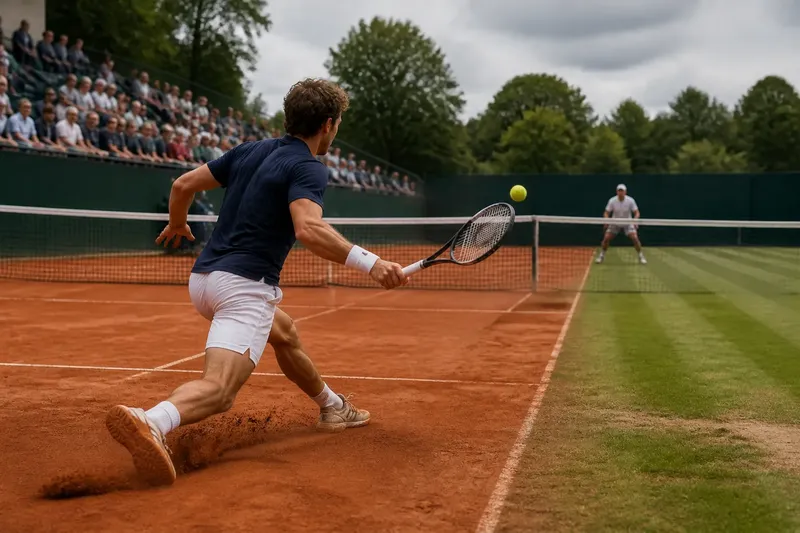
The common mistake in comparing clay and grass is treating each as one predictable condition. That shortcut costs viewers the details: a grass court can produce different bounces from one patch to another, while clay can vary with moisture and upkeep. To read clay or grass court play, watch the ball’s path and the player’s response on that particular court, not just the surface name.
Start with the bounce
On many clay courts, the ball grips the surface and rebounds higher than it does on a closely cut grass court. That extra height can give a player more time to set up a groundstroke, especially when the shot arrives with topspin. It can also push a receiver farther behind the baseline, because a comfortable contact point may be higher and farther back.
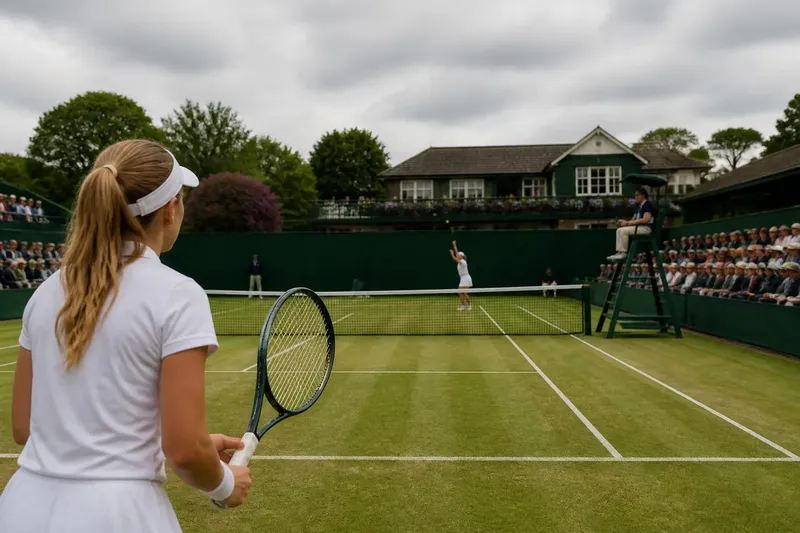
Grass often produces a lower, quicker rebound, but “low” does not mean every ball stays low. A ball that lands on a worn or uneven patch may take an awkward hop. Watch the first few exchanges: does the ball rise cleanly, skid through, or change direction after landing? Those observations are more useful than assuming every grass court behaves alike.
Spin changes the picture. Topspin can make a clay-court bounce kick up sharply, while slice may stay low or slow after landing. On grass, a skidding slice can be especially difficult to lift, but the effect depends on the court’s condition and the incoming ball. Follow the ball from racket to landing to contact; the bounce alone does not tell the whole story.
Read the footing
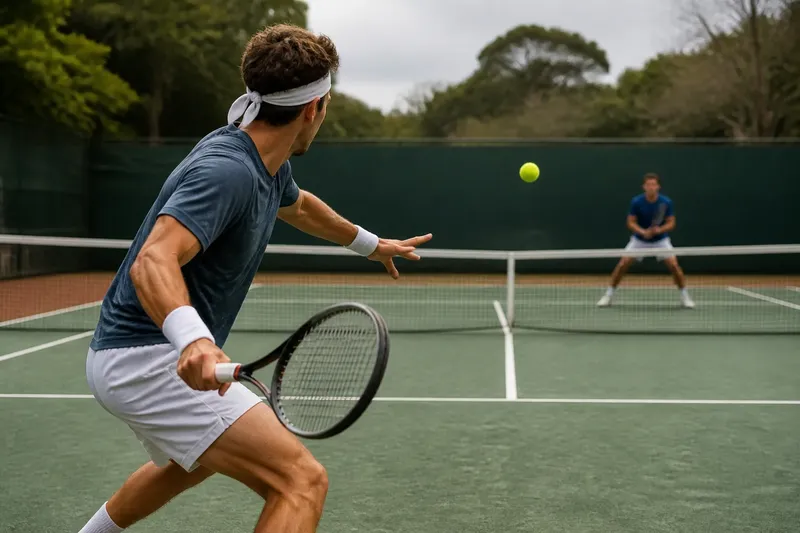
Clay allows many players to slide into a shot, then use that slide to control their stopping point. The movement can look loose, but it is deliberate: the player must judge how far the foot will travel and arrive balanced enough to recover. A long slide that ends with the body drifting away from the next shot can leave the court open.
Grass generally rewards quick adjustments and secure footing. Players may take shorter steps when changing direction because a sudden, extended plant can be less reliable on a slick or worn area. Look at the split step—the small preparatory hop before an opponent strikes—and the first step afterward. A player who stays light and centered can react without committing too early.
Neither surface removes the need for good movement. Clay’s slide is not a substitute for reaching the ball in position, and grass does not make every change of direction easy. Court shoes also matter: clay shoes commonly use tread suited to sliding and releasing on granular ground, while grass shoes are designed for grip on turf. Players should choose footwear for the court and follow the maker’s guidance for that model.
Notice rally shape
Clay often supports longer exchanges because the higher bounce can give defenders time to reach and return a shot. The rally may develop through repeated heavy groundstrokes, with players trying to move an opponent wide before opening a path forward. But a long rally is not automatic. A well-placed serve, a short ball, or an early attack can end the point quickly.
Grass often encourages a more direct pattern. A low bounce can make a deep, fast shot hard to handle, and a player may follow a strong serve toward the net to cut off the return. Yet serve-and-volley is a choice, not a rule of the surface. A player who returns well or prefers to rally from the back can still shape the point differently.
When watching, track the transition after a short ball. On clay, a player may slide forward, reach the ball, and recover while still on the move. On grass, the same approach may call for quicker, smaller steps and an earlier decision about whether to volley. The important clue is not simply where the player stands; it is whether the surface gives that player time and balance to make the next shot.
Check the court itself
A surface label describes a broad type, not a uniform playing condition. Clay may be dry and loose, damp and compact, freshly brushed, or worn where players move most. Grass can vary with the density and height of the turf, the firmness beneath it, and wear near the baseline or service boxes. These changes affect traction and bounce within the same court.
Weather adds another layer. Moisture can alter how clay holds together and how grass grips a shoe. Sun and shade may also leave different areas with different conditions. Rather than guessing from the forecast, observe what players do: are they sliding more cautiously, adjusting their contact point, or avoiding a particular landing area?
Picture a viewer arriving midway through a match on a grass court. The first few rallies seem fast, but one return takes a higher, uneven hop near a worn baseline patch. The useful conclusion is not that grass has suddenly become a high-bouncing surface; it is that this court has a local variation worth watching. The viewer can compare later balls from that patch with clean rebounds elsewhere.
What should you watch?
Does the ball skid or rise?
Compare the rebound after similar shots, especially a topspin drive and a slice. Note where the ball lands and whether the next contact is high, low, or awkward; avoid drawing a broad conclusion from one unusual bounce.
How does the player stop?
On clay, watch for a controlled slide that ends in a balanced position. On grass, notice whether the player uses small adjustment steps and stays upright through a change of direction.
What happens after the serve?
See whether the server follows the ball toward the net or stays back to begin a groundstroke exchange. The choice reflects the player’s tactics and the return as well as the surface.
Where does the court look worn?
Check the baseline, service boxes, and common movement paths for scuffed clay or thin grass. Then watch whether the ball’s bounce or a player’s footing changes near those areas.
Compare without shortcuts
For a fair comparison, choose a similar moment on each court: a serve and return, a deep groundstroke, or a short ball that brings someone forward. Watch the landing, rebound, contact height, and recovery movement. This gives you a clear sequence to compare without assuming that one point represents the whole surface.
Keep the player in the comparison, too. A strong mover may slide confidently on clay, while another may prefer to take the ball early. On grass, one player may attack behind the serve while another stays back. Surface conditions shape the available options; technique and tactics determine which options a player uses.
When you watch clay or grass court play, make a specific note: “low skid on the serve return,” or “high bounce from the loose patch.” A concrete observation is more useful than calling a whole match slow, fast, easy, or difficult. It lets you see how the court influences each point while leaving room for the next bounce to surprise you.